
You’ve seen photos of someone perched on a sunny slab of rock, a lake glittering way below, grinning like they’re having the best day of their lives. A little voice in your head suddenly asks, could I do that, too?
The short answer is, yes!
The tricky part is knowing where to start. Which type of climbing do you want to do? What do the grades mean? Which crags are beginner-friendly?
Fortunately, some of our team are well-versed in Lake District climbing*. So here’s our no-nonsense guide to climbing in the Lakes, including where to start, the different types, and answers to common FAQs.
*This article is a basic guide and overview of climbing in the Lakes, it’s not a replacement for proper training! Climbing is brilliant, but it can seriously hurt you if you get it wrong.
Before you climb outdoors, you need the skills and knowledge to keep yourself and the people you’re with safe. That means knowing how to tie in, belay, place and check gear, build anchors, and read the weather. If you’re not 100% sure of your skills, climb with a qualified instructor until you do.
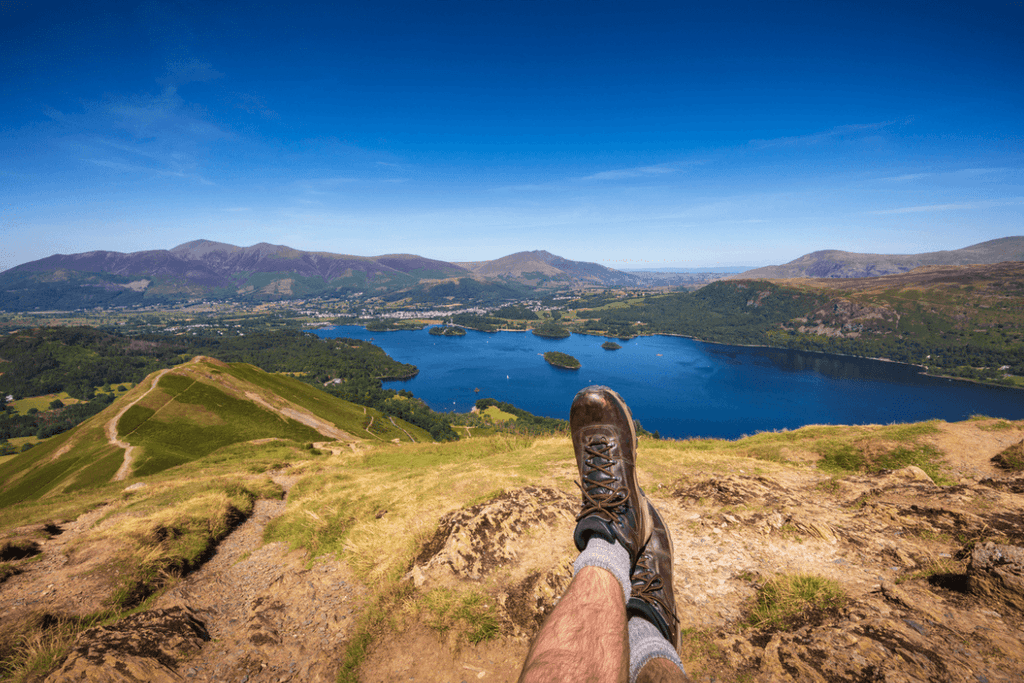
What are the different types of Lake District climbing?
There are three main types of rock climbing in the Lake District: bouldering, sport, and trad (or traditional). There’s a lot of trad climbing and bouldering in the Lakes, with a sprinkling of sport climbing down south.
Here’s a breakdown of what each type of climbing involves:
| Type of climbing | Ropes? | How it’s graded in the UK | Where to start |
| Bouldering | No, you use crashpads | French grades or Font grades | V0 to V2 / 4 to 5+ |
| Sport climbing | Yes, clipped into bolts that are secured into the rock | French grades | 4 to 5+ |
| Trad climbing | Yes, with gear you place yourself into the rock as you climb | British adjectival and technical grades | Moderate to severe |
Let’s take a look at each climbing type in more detail.
Lake District bouldering
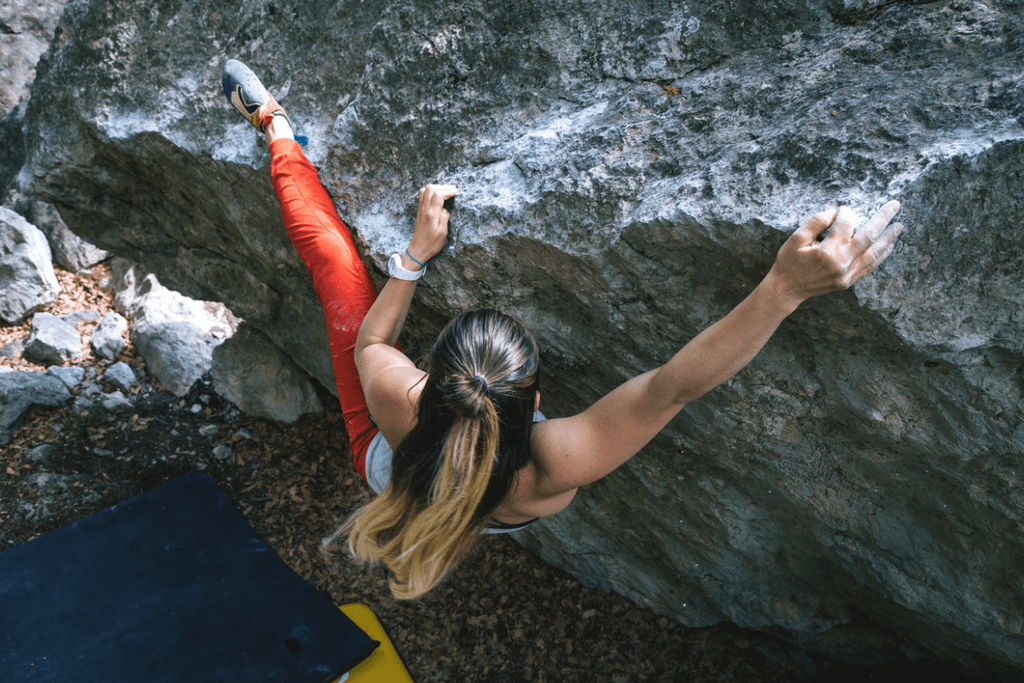
Bouldering is climbing short problems on rocks without a rope. Instead, you have thick crash pads underneath you that protect you if you fall or jump off.
Pros of bouldering as a beginner
- You don’t need to understand climbing gear. No ropes, knots, belaying or placing protection. Just shoes, chalk and a pad.
- Problems are easy to read. They’re short, so you can usually see the whole thing from the ground and plan your moves before you start.
- You don’t need a technically experienced partner. A friend to spot you (steer you onto the pad if you come off) is all you need.
- It’s cheap to get into. Once you’ve got shoes, a crash pad is the only big purchase, and you can hire one to start with.
- You learn fast. Because problems are short, you can try the same moves again and again until they click.
Cons of bouldering as a beginner
- The climbing can be hard. Problems pack all the difficulty into a handful of powerful moves, so they often feel tougher than you’d expect. A 6a boulder problem will feel a lot harder than a 6a sport route, so don’t be surprised if you’re humbled on your first trip. Everyone is!
- It’s tough on your body. All that pulling hard on small holds can be rough on your fingers, skin, and shoulders.
- Falling takes some getting used to. Even with a pad underneath you, coming off and landing well is a skill in itself. You must land on your feet in the middle of the pad, bend your knees to soak up the impact, and then roll onto your bum or back.
- Pads are bulky. Lugging a crash pad to the boulders isn’t always fun, especially on a longer walk-in.
- You can’t climb far. Problems are short, so if you’re after big views and the feeling of being high up a crag, roped climbing is more your thing.
Where to go bouldering in the Lake District as a beginner
You want somewhere with lots of easier problems and a good spread of grades, so you can warm up, push yourself a bit, and level up if you feel confident. These are our favourite spots:
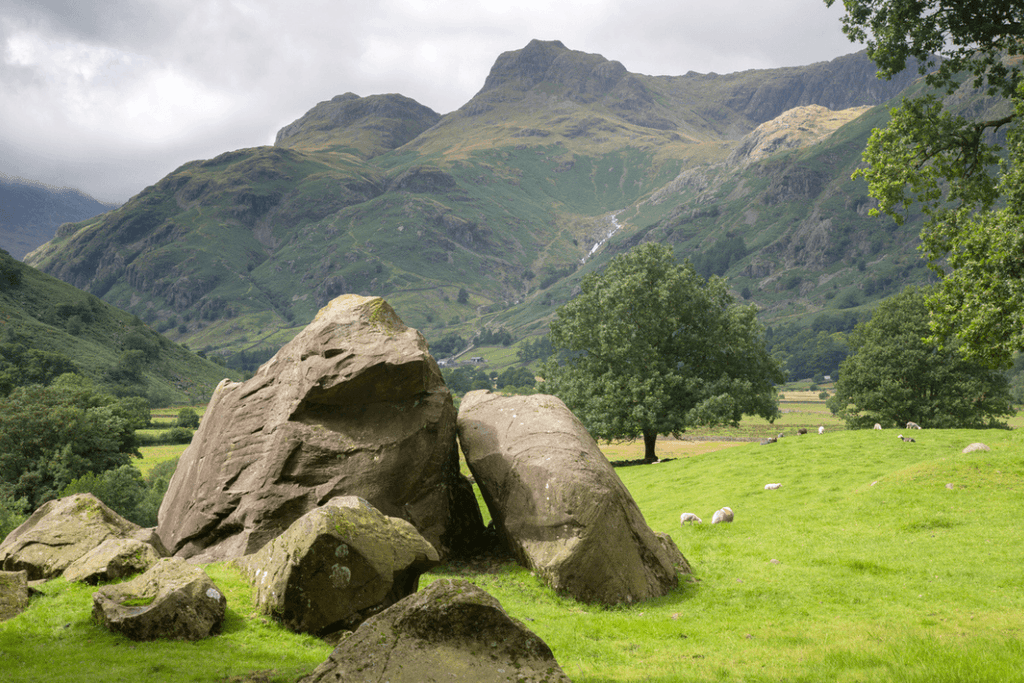
- The Langdale boulders, Great Langdale. A minute from the road, quick to dry, and has a few easier but interesting problems for newbies. And all with the Langdale Pikes as a backdrop!
- Badger Rock, Kentmere. A big, lone rhyolite boulder in a field near Kentmere Hall, with around 67 problems and lovely flat landings.
- Dunnerdale Boulders, Duddon Valley. Around 86 problems on quick-drying andesite in one of the Lakes’ quietest valleys. Park at Birk Bridge and walk up the bridleway.
- Carrock Fell, Northern Fells. Hundreds of problems on rough, grippy gabbro boulders, just five minutes from the road. Head for the Far North circuit or the Warm Up area between autumn and spring when it’s cool.
Watch this video for a quick rundown of the best beginner boulders at Carrock Fell:
UKC Videos – DESTINATION GUIDE: A Bouldering Circuit at Carrock Fell
Sport climbing in the Lake District
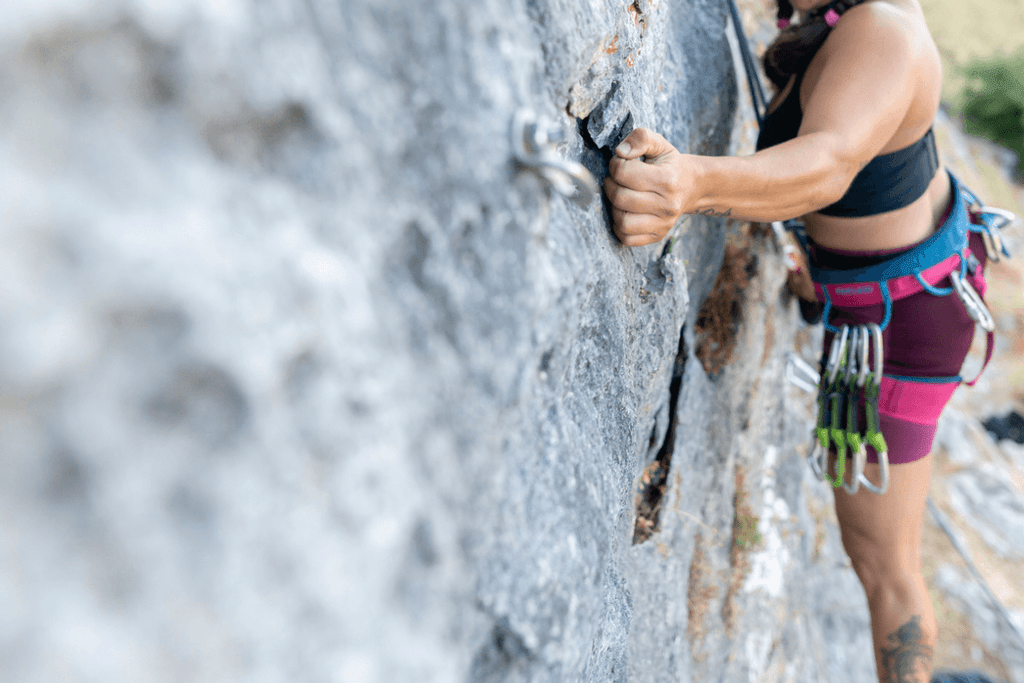
Sport climbing is roped climbing where the protection is already fixed in the rock. As you climb, you clip your rope into metal bolts, so there’s no need to place any gear of your own.
There’s not loads of it in the Lakes, but there are a few great spots if you know where to look.
Pros of sport climbing as a beginner
- The protection is already there. You don’t have to learn how to place and judge trad gear, which makes the experience a bit easier and less scary.
- You get loads of climbing done. Routes are usually single pitch, so you can tick off several in a day.
Cons of sport climbing as a beginner
- Less choice than trad or bouldering. There are fewer routes to choose from in the Lakes than somewhere like Yorkshire or the Peak District.
- A lot of it is hard. The best-known sport crag, Chapel Head Scar, really suits climbers operating at 6c and above).
Where to go sport climbing as a beginner in the Lake District
You want a crag with plenty of lower-grade routes and well-spaced bolts. These are our top sport climbs in the Lake District:
- Bramcrag Quarry, St John’s in the Vale. Around 190 sport routes from 4c (mostly in the 6a range), on off-vertical rock with great views of the northern fells.
- Scout Scar, near Kendal. Limestone with a good mix of routes from 3b and up, and often drier than the central Lakes.
- Runestone Quarry, near Coniston. A slate quarry with lots of low-grade sport routes and friendly bolting. It’s about a 25-minute walk in, but it still feels like you’re in the mountains.
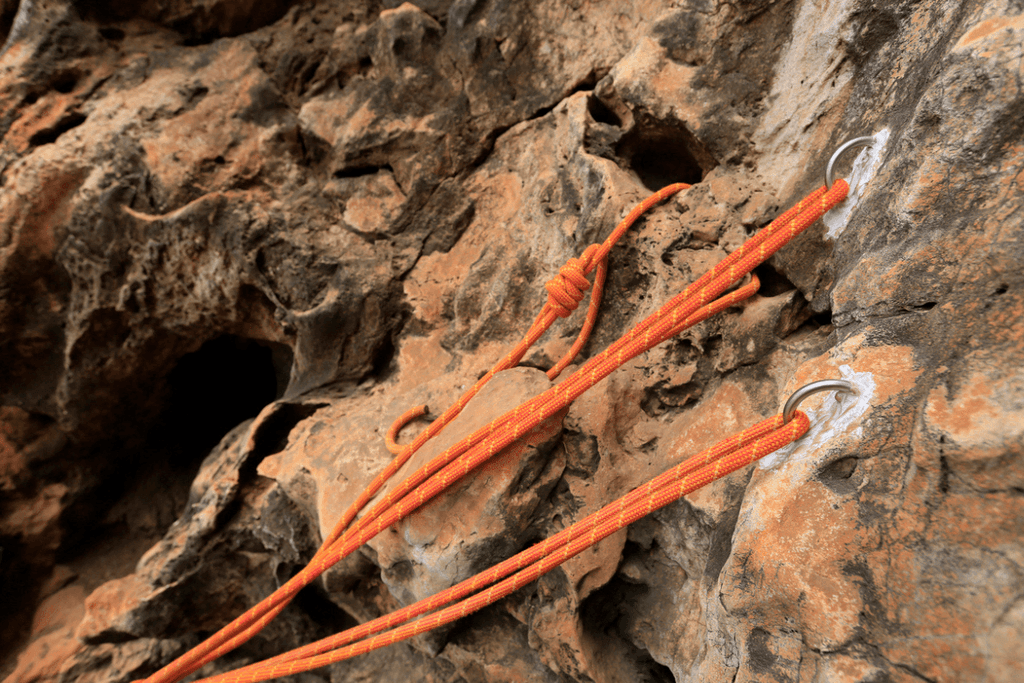
Traditional rock climbing in the Lake District
Instead of clipping bolts, trad climbers place removable gear (nuts, cams, and slings) into cracks on the way up a route. The second climber takes it out as they climb up after.
British trad routes have two grades. The first is a word that tells you how hard and how serious the whole route is. From easiest to hardest, it goes:
- Moderate (M)
- Difficult (D)
- Very Difficult (VD)
- Severe (S)
- Hard Severe (HS)
- Very Severe (VS)
- Hard Very Severe (HVS)
- Extremely Severe (from E1 all the way up to E11)
The second is a technical grade (like 4a, 4b, or 5a), which tells you how hard the trickiest single move is.
Put simply, the word tells you how serious the route is, and the number tells you how hard the moves are.
Don’t worry if you’re confused! The BMC’s breakdown of how trad grades work has more information on the grading system. You can also use this grade conversion chart from Rockfax to see how the different types of climbing grades compare.
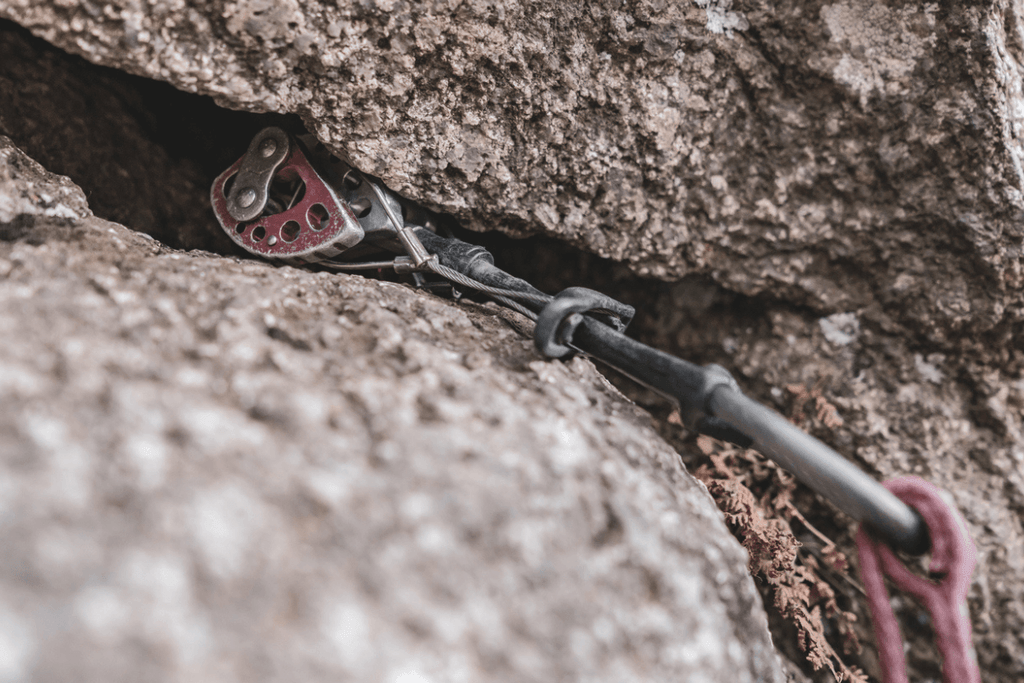
Pros of trad climbing as a beginner
- There’s loads of it. Trad is everywhere in the Lakes, so you’ve got hundreds of easy routes to choose from as a beginner.
- The easy grades are genuinely easy. Moderate and Difficult routes are often more like steep scrambles, perfect for finding your feet.
- You get proper adventures. Even easy routes take you up big, multi-pitch lines with amazing views.
- You learn real mountain skills. Placing gear, building anchors, and finding your way up a crag set you up for a lifetime of climbing.
Cons of trad climbing as a beginner
- It takes the most skill to do safely. Your protection is only as good as the gear you place, and that takes time (and good teaching) to learn.
- The kit is expensive. A full trad rack of nuts, cams, and slings (minimum £500) costs a lot more than a set of quickdraws (minimum £200) for sport climbing or a crash pad for bouldering (minimum £150).
- The grades can be confusing. Two grades per route takes a bit of getting used to.
- Routes can be harder to follow. There are no bolts to show the way, so route-finding is a challenge (but it’s also part of the fun).
Where to go trad climbing as a beginner in the Lake District
You want low-lying crags close to the road, with plenty of easy routes and simple setups.
These are our top picks:
- The Diamond Crag, Eskdale. A clean little granite crag next to the Fisherground bouldering, with routes from Moderate to Severe. There’s next to no gear on the routes, but there are bolts at the top. It’s perfect for setting up a top rope or getting to a safe anchor without having to worry about building your own.
- Brantrake Crag, Eskdale. Low-lying, quick-drying granite with single-pitch routes up to 30m, about 10 minutes from the car. Check for nesting bird restrictions, usually between the 1st of March and 30th of June.
- Brown Howe Quarry, Coniston Water. A small slate quarry right by the road, with around 14 easy routes from Moderate to Severe.
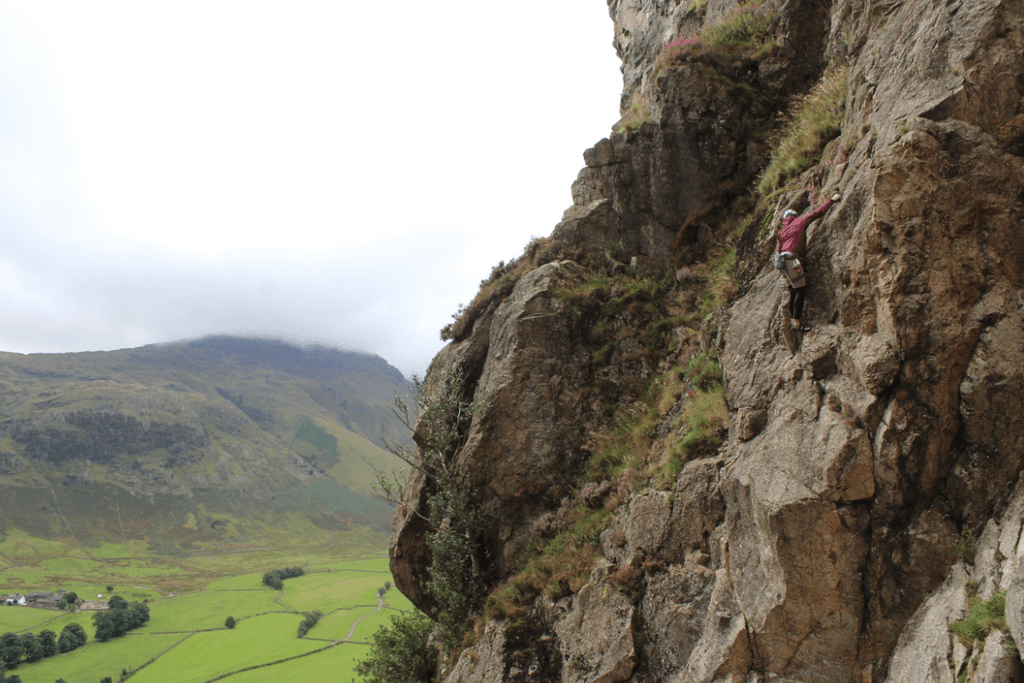
Climbing in the Lake District as a beginner: Where to start
Our advice is to get the basics nailed at an indoor wall, then head outside with a qualified guide to show you the ropes (pun intended).
Here are four steps to go from A (not climbing at all) to B (touching some real rock).
1. Try a climbing wall in the Lake District
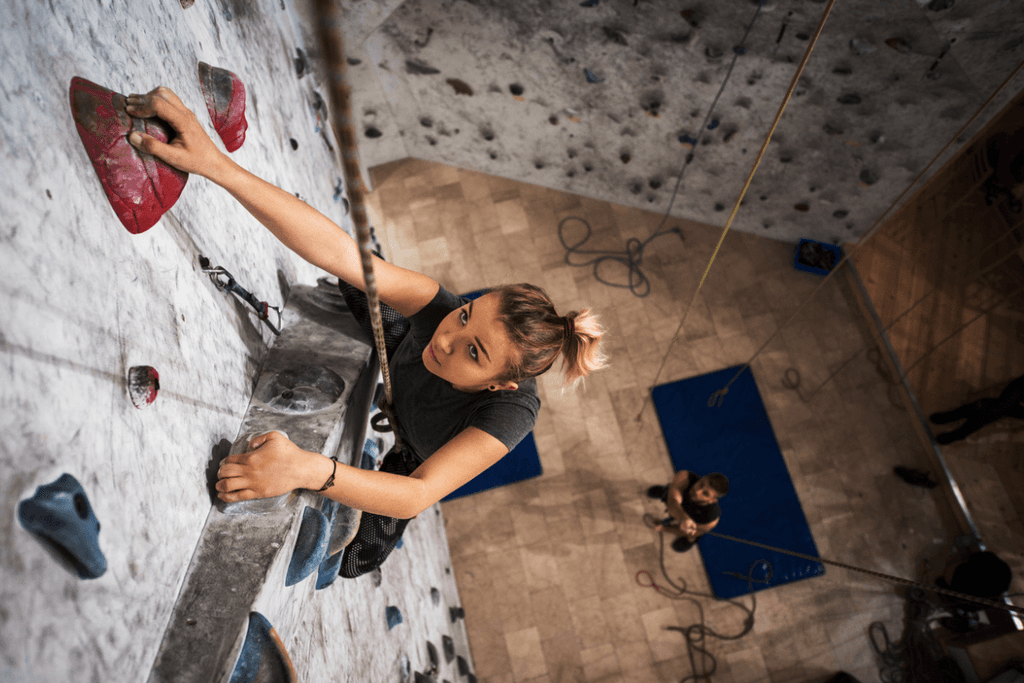
An indoor wall is the cheapest, safest, and quickest way to find out if you actually like climbing. Indoor climbing also gives you a chance to learn the skills you need to climb safely outside, but in a more controlled environment.
Most walls run taster sessions and learn-to-climb courses, where an instructor shows you how to:
- Tie in (tying the rope to your harness)
- Belay (holding the rope to catch your partner if they fall and lower them safely)
These are the climbing gyms we recommend:
- KendalWall. The biggest indoor climbing centre in Cumbria, with roped climbing, bouldering, and a 25-metre wall. There are climbs for every level, and they run instructed sessions for beginners, plus a programme of outdoor courses for when you’re ready to try real rock.
- Keswick Climbing Wall. A few minutes’ drive outside Keswick, this climbing wall runs indoor lessons and kids’ sessions. They also take you out rock climbing in Borrowdale when you’re ready to make the jump outside. There’s free all-day parking and a café, too.
- Ambleside Climbing Wall. A smaller wall right in the middle of town, with top-rope routes on the main wall and a separate bouldering room. It’s great for taster sessions and private lessons, and you can hire climbing shoes and other kit there too.
Don’t live in or near the Lakes? No problem. You don’t need to wait for a trip to Cumbria to get started.
With climbing getting so popular in the last few years, there are climbing walls in most towns and cities across the UK. Almost all of them run beginner sessions where you can learn the basics, like tying in, belaying, and moving on the wall.
UKClimbing’s climbing wall directory helps you find one near you.
2. Book a guide
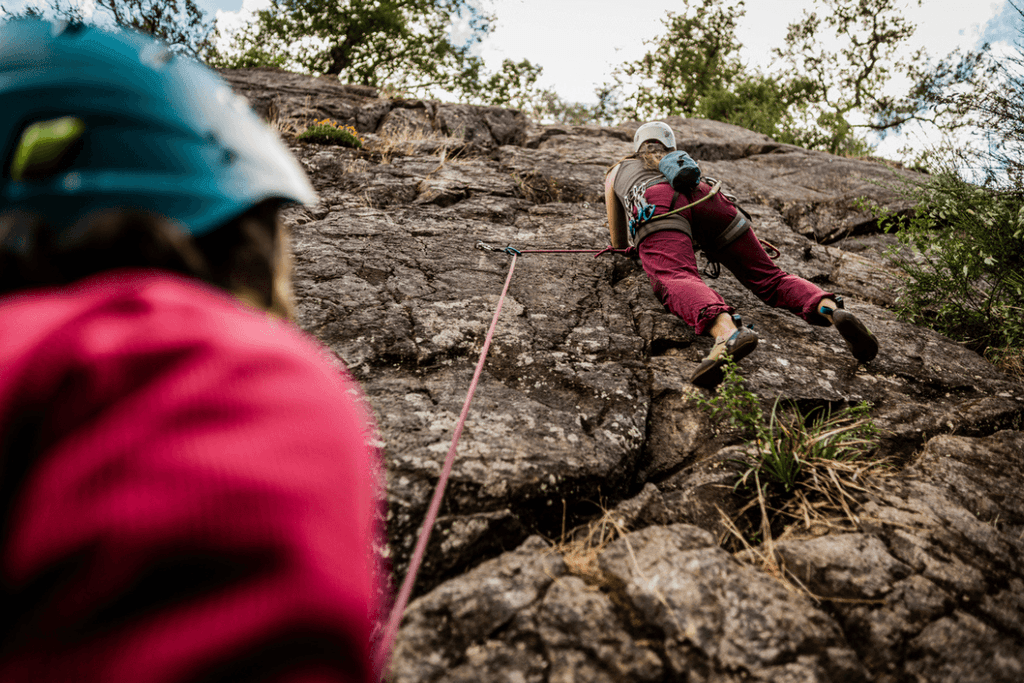
To climb on real rock safely, book guided rock climbing in the Lake District. The instructor brings the gear, picks a crag that suits the weather and your experience, and teaches as you go.
You can book an instructor through one of the climbing walls above, or take a look at Lake District Mountaineering. Look for someone with a Mountain Training qualification, like the Rock Climbing Instructor (RCI) or Mountaineering and Climbing Instructor (MCI) award.
3. Get a guidebook
A guidebook tells you where the crags are, how to get there, what grade each route is, and whether there are any access restrictions.
The Fell and Rock Climbing Club (FRCC) writes the definitive guidebooks for the Lakes. If you only get one, go for their selected guide, Lake District Rock. It rounds up the best routes across the whole area, so you’re not buying a separate book for every valley.
You can also use UKClimbing for route info and reviews from other people who have climbed the routes you’re looking at. Or check out the Rockfax app (you have to pay for full access, but there are helpful diagrams and maps of where to find crags and boulders).

4. Hire or buy climbing gear (or climb with a guide who has it all)
The climbing gear you need varies depending on the type of climbing you plan to do.
Here’s roughly what you need for each style of climbing:
| Type | Essential gear |
| Bouldering | Climbing shoes, chalk bag, crash pads |
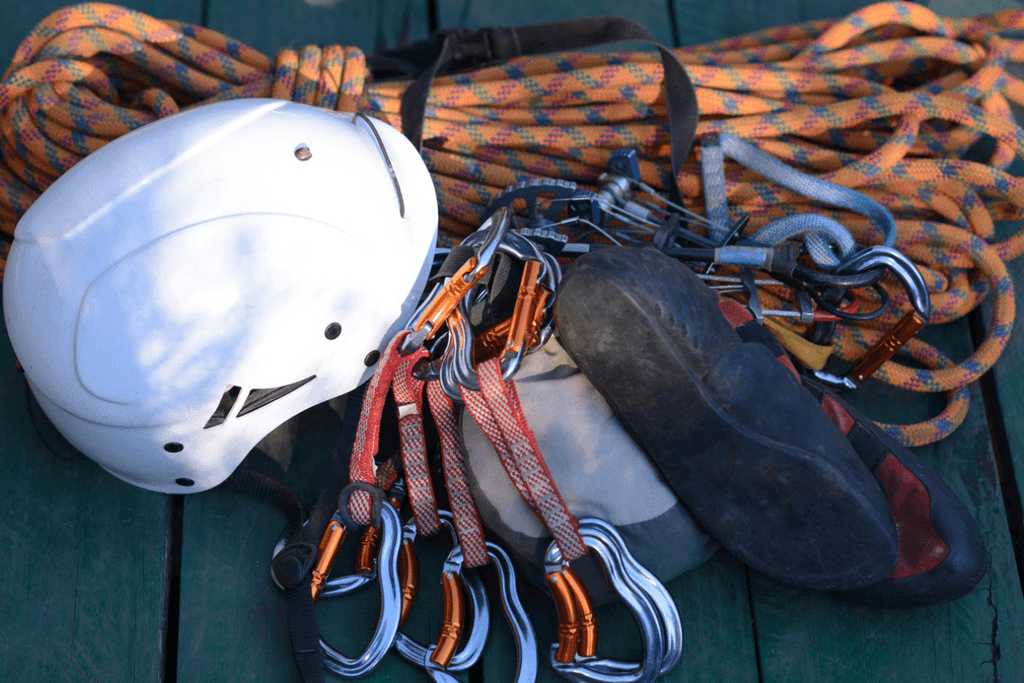
| Sport climbing | Shoes, harness, helmet, belay device, rope, quickdraws |
| Trad climbing | Everything for sport, plus a rack of nuts, cams, and slings |
The only thing you probably have to buy if you’re heading out without a guide is climbing shoes. The Climber’s Shop in Ambleside has shoes you can try on, or look online to find some second hand.
If you don’t want to splash out on climbing gear yet, you have two options:
- Rent kit from local climbing stores
- Go with a guide or friend who already has the gear
Going bouldering on your own? Hire a crash pad from Alpkit in Ambleside for about £10 a day. They’ve only got a couple, so call ahead.
Good to know: Renting ropes and quickdraws isn’t something we usually recommend since you don’t know what they’ve been through. Have they caught a massive fall? Been dropped down a crag? Sat in a damp car boot next to a leaky battery?
Damage like that can weaken gear without leaving any visible marks. So if you want to try roped climbing, go with a guide or a friend who has their own kit.
When to go: Weather and conditions for Lakes climbing
The best time to climb in the Lakes is usually spring and autumn. You want cool, sunny, dry days, ideally after a day or two without rain.
Summer brings long days and warm evenings, with plenty of time to squeeze in a post-work climb. But it can also be hot and muggy, which means sweaty hands and greasy rocks that are hard to grip.
Add in midges on still evenings, and it’s not always the dream you’d expect!
Winter can be good. A cold, clear, high-pressure day can give you some of the best grip of the year, especially on the boulders. But the days are short, the rock can stay damp for a long time, and the weather can turn quickly.
The sweet spot is a crisp, sunny day in spring or autumn. The cool air keeps your hands dry and the rock feels sticky, making it easier to grip. The crags are quieter too. Just remember that some crags close in spring for nesting birds, so check restrictions before you go.
Whatever the season, the Lake District is the wettest part of England, so here are a few things worth knowing before you head out:
- Low crags dry faster. Valley crags and roadside boulders are usually good to go a few hours after rain. High mountain crags often need several dry days, and they seep after a wet spell.
- A breeze is your best mate. It dries the rock, keeps you cool, and blows the midges away.
- Check a mountain forecast. Higher crags are colder and windier than the valley floor. Use a mountain forecast like MWIS or the Met Office mountain forecast, not just the one for your nearest town.
- Have a plan B. If the weather turns, don’t push it. A wet day is the perfect excuse to hit a climbing wall instead.
FAQs about Lake District climbing
Do multi-pitches in the Lake District have fixed anchors?
Mostly, no. On multi-pitch routes in the Lakes, you usually build your own anchors. You occasionally find a bolted anchor, mostly in quarries or at popular single-pitch spots, but don’t count on it. Make sure you know how to build a solid anchor before you set off.
Is the Lake District good for climbing?
Absolutely! There are thousands of routes across every grade, from easy roadside slabs to huge mountain classics. There’s bouldering and some sport climbing too, so there’s something for everyone.
Is the Lake District limestone?
Mostly not. The central fells are volcanic rock, known as the Borrowdale Volcanic Group, which is rough and grippy when dry. You’ll also find granite in Eskdale, gabbro at Carrock Fell, and slate in the old quarries. The limestone is down in the south Lakes, at crags like Chapel Head Scar and Scout Scar.
Where is the big boulder in the Lake District?
That’s Bowderstone in the Borrowdale valley, a few miles south of Keswick. It’s a huge boulder of around 2,000 tonnes, balanced on one edge, with a ladder so you can climb to the top. It’s a short walk from the National Trust car park on the B5289.
Get out there and enjoy climbing in the Lakes
By now, you have a good idea of where to start with Lake District climbing. You know which type of climbing suits you, what the grades mean, and which crags and boulders to head for first.
Start small, learn from people who know what they’re doing, and build your skills and confidence one route at a time. Before you know it, you’ll be climbing classic routes all across the Lakes! Have a blast, and stay safe out there.